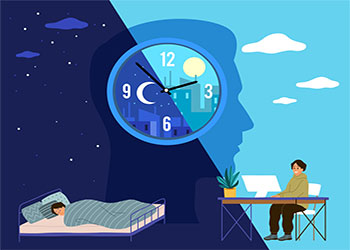
The circadian rhythm is the natural internal process that regulates the sleep-wake cycle and repeats through every 24 hours. It is controlled by the suprachiasmatic nucleus which innervates a small gland called a pineal gland located in the midbrain.
This pineal gland is responsible for the production of a hormone called melatonin which is produced in response to darkness.
A typical circadian rhythm is like
Morning(6 am - 9 am): Wake-up time. Serum cortisol level increases, which increases body temperature and heart rates and provides alertness.
Daytime(9 am - 4 pm): Body temperature is high and promotes activity and focus
Evening(6 pm to 9 pm): Light fades which promotes melatonin production. Body temperature starts to decrease and body prepares for rest
Night(10 pm to 6 am): Deep sleep period which allows the body to repair and rejuvenate. Melatonin levels peak in the early part of the night, promoting restful sleep.
CAUSES for disrupted circadian rhythm:
Shift work disorders
Jet lag
Exposure to artificial light
Lifestyle factors like irregular sleep patterns, caffeine and other stimulants, sedentary lifestyle, late night eating, heavy meals before bedtime, irregular bedtime disrupt normal circadian rhythm
Some medical disorders like sleep apnea, insomnia, restless leg syndrome also disrupt circadian rhythm
Mental health disorders like depression, anxiety, and bipolar disorders can be responsible by disrupted circadian rhythm
Ageing
Stress
HEALTH DISORDERS due to disturbed circadian rhythm
sleep disorders
Sleep deprivation
Reduced focus and productivity and memory
Physical health issues like obesity, diabetes, cardiovascular disorders
Increased mental disorders like depression, anxiety, irritability and mood swings
Weakened immune system
Hormonal imbalance: Disturbed circadian rhythm can interfere with the metabolism of hormones like melatonin, cortisol and insulin
Increased risk of chronic diseases such as diabetes, cardiovascular diseases and certain cancers
Management and Treatment
Healthy lifestyle
Regular meal schedule
Regular bedtime routine
Avoid daytime naps
Regular physical exercises
Limit caffeine, alcohol, nicotine and drugs
Manage exposure to light
Light Therapy
Medications and supplements can be recommended to align sleep -wake cycle like melatonin